


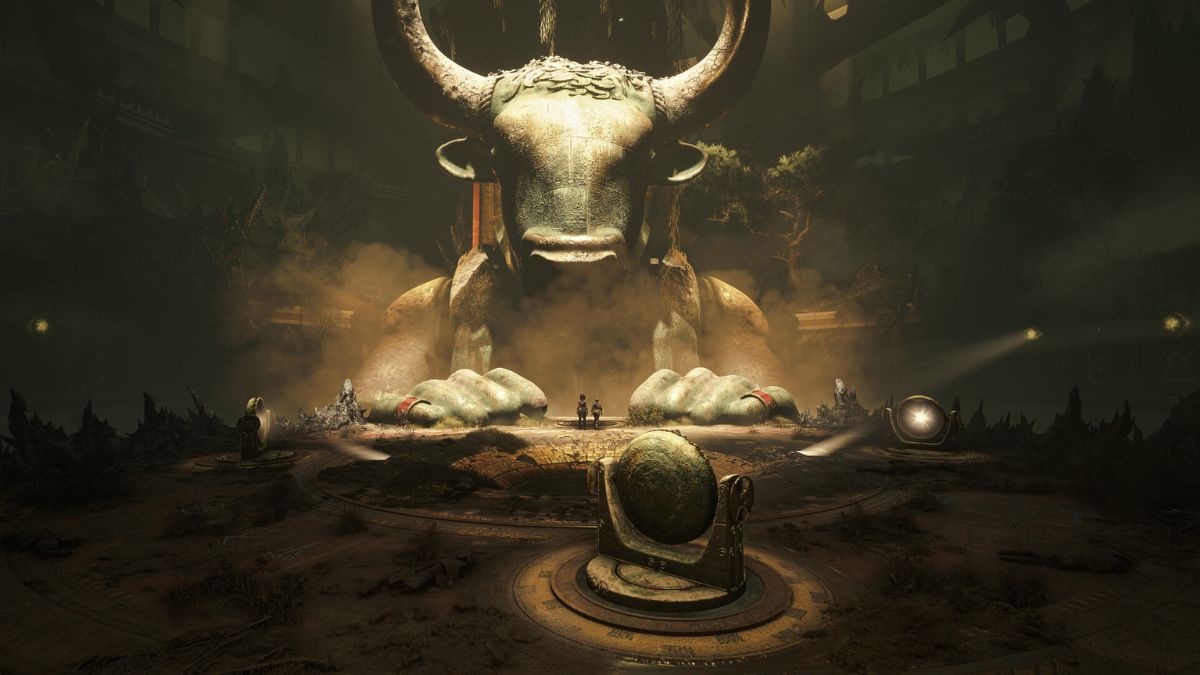
Resonance: A Plague Tale Legacy follows the story of Sophia – a key character in A Plague Tale: Requiem – as she uncovers the truth behind her childhood visions on an island full of danger. This compelling tale preludes the other games in the series, but despite this, it manages to hold its own with a tantalizing and suspenseful story that links the game to the other Plague Tale games without compromising the material from its predecessors. Unfortunately, it is hindered by repetitive fights and an anticlimactic ending that could have utilized more of the skills you learn throughout the game.
A Compelling and Spoiled Story

There is a fine dance that needs to be performed to make you care about a story once you know the outcome. In this instance, Resonance: A Plague Tale Legacy tells the story of Sophia before the events of Requiem, meaning you know the outcome and that Sophia will inevitably survive whatever trials and tribulations that she must overcome, which ultimately sours the story a bit because it means that the protagonist couldn’t possibly be in danger in the same way that other games treat their protagonists.
Despite this drawback, Resonance doesn’t pull punches with its side cast of characters, leading them in unexpected ways that took me by surprise. Early in the game, I spent much of my time taking guesses about which characters I would see again, and who would make it to the end of the story. It turned out to end in a much different way than I expected, despite the obvious survival chance of the main protagonist.
A large section of the story focuses on the use of two protagonists in the same way that other entries in the series did. The difference here is that while in games like A Plague Tale: Requiem, you are able to use the abilities of both Amicia and Hugo, making the use of two protagonists more compelling. In Resonance, you are bound to one character, with your partner often being reduced to someone whom you drag around, get out of danger, and ultimately rely on as more of a tool than someone who actually matters in this world. While I enjoyed having a partner, I often felt it was nearly pointless, as they didn’t serve to move the story forward in a significant way until the game was almost completed.
Less Sneaking, More Slicing

As a fan of the Plague Tale series, I went into Resonance expecting more of a stealth-focused game, as these games typically rely heavily on puzzle solving and sneaking rather than brute forcing your way through an obstacle. The puzzles are nearly all focused on bending light, manipulating it to your will to unlock doors, move walls, or defeat enemies. Like most newer titles, it has a large degree of hand-holding that can be turned off, but it bothers me nonetheless. With this turned off, I progressed through the game, completing various light-based puzzles that each felt rather intuitive and didn’t require a ton of thinking outside the box as I had expected from developer Asobo Studio. Still, they added a large degree of fun to the game, and I enjoyed it. Along with this, the map design was as good as I expected from past games, with beautiful environmental details and strong level designs that had me wanting to explore more than was available to me.
Other parts of the game are split into two sections: combat and stealth. Of course, past Plague Tale games didn’t shy away from combat, as there are times when you need to defend yourself, but the focus on it in Resonance made me expect more than the repetitive battles I participated in. The game consistently went back and forth between fighting to puzzles and back to fighting. It became rather obvious when the next roadblock would be coming, and I would have much rather had an option to sneak around some of the enemies than bulldoze my way through them. It had several combat skills to unlock that refined the fights, but it didn’t do much to change how I played.
When the game did shift to more stealth-based gameplay, it was intense, and required a fair bit of skill to avoid the looming monster, and when I needed to break from stealth, it was a mad dash to escape that had my heart racing. Since the beast is weak to light, I had to make for the nearest brazier and hope it didn’t catch me first. If I was playing slow and methodical, I had to make sure I was consistently behind cover or I would undoubtedly be killed, and every breath from the monster was more suspenseful than the last. I desperately wish that more of that iconic, suspenseful stealth gameplay was found throughout the game, as it made the second half of Resonance feel far better than the first.
My biggest gripe with Resonance’s gameplay is the boss fights. They start off suspenseful, but by the time you reach the end of the game, they tend to blur together. Every boss uses a combination of three or four moves that are easily dodged or parried, allowing you to strike back with ease. It never felt like a true degree of skill was required, especially because most bosses seemed to fall into a pattern where they would perform the same move every time I hit them with a combo, making the boss fight more of a rinse and repeat than a test of skill. This all culminates in what I was hoping would be a grandiose final fight that ultimately left me bored because it didn’t utilize any combat mechanics I had learned or skills I had gained, and instead used what is essentially a point-and-shoot mechanic.
Final Verdict

Resonance: A Plague Tale Legacy is a solid entry in the series that diverts away from the standard stealth-based gameplay, focusing more on combat. The story is as tense as previous titles, but the knowledge of the protagonist coming out on the other side unscathed made it difficult to dive deep into her plights. Instead, the side characters really shine through, but leave more to be desired, as they aren’t featured as much as I would have liked. The gameplay has a heavier focus on combat, but when you need to sneak, the game shines and feels extremely suspenseful, making me crave more of it. It comes to a head with a final boss that ultimately sours the experience, making it more of a drag than the climactic finale that is to be expected. Overall, Resonance is a strong title that I wish had more of what I loved from previous entries in the series.
Resonance: A Plague Tale Legacy was reviewed on PC with a code provided by Focus Entertainment. It is also available on PlayStation 5 and Xbox Series X.
More From Us:
Crimson Moon Review (PC): Stylishly Parrying the Undead
The Review
Resonance: A Plague Tale Legacy
PROS
- Compelling stealth-based gameplay in the second half
- A solid story with interesting side characters
CONS
- Repetitive combat that gets tiresome halfway through
- Anticlimactic ending that utilizes none of the combat skills you learned


