


1666: Amsterdam has been a long time in the making, with the game first being heard about over a decade ago. Creator Patrice Désilets, best known for his work on the Assassin’s Creed series, started the project while working at THQ Montreal, which was bought by Ubisoft in 2013. After being let go from Ubisoft, he sued the company for the rights to 1666: Amsterdam. Fast forward to today, and we have finally received a first look at the project during Summer Games Fest.
The initial trailer revealed the basics of this game. You play as a witch, circa 1666, established as a Collector, meant to uncover demonic entities hiding amongst the humans. You are meant to wield spells to destroy these entities, and your cat is there to help you along the way. Coinciding with the trailer, the team announced that there is a 30-minute demo for 1666: Amsterdam, and after playing it, I wanted to share some thoughts. While the overall design is good, the demo felt a bit unfinished, and I am not the biggest fan of the narrative style chosen. Despite the negatives, I am excited to see what the full game has in store.
A Witch and Her Cat in Amsterdam

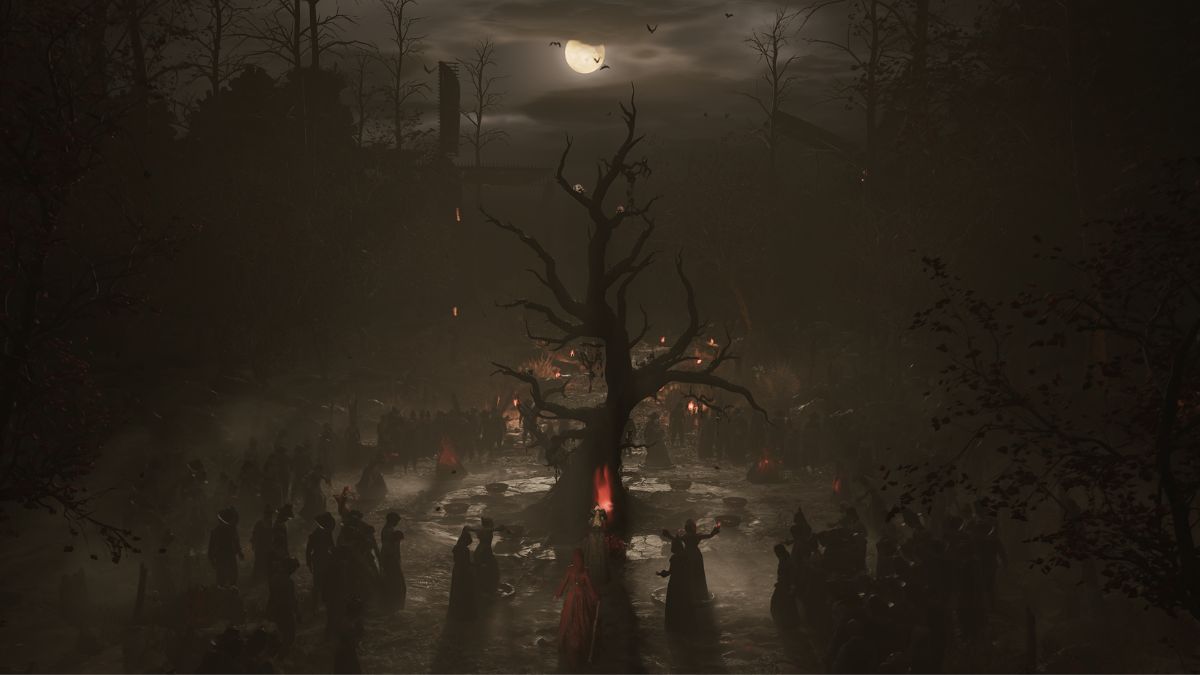
The 1666: Amsterdam demo begins with you making your way to your commencement ceremony. After a slight introduction to the game’s magic, allowing you to absorb energy from organic life and using it to cast spells, you arrive at the base of a tree surrounded by members of the Zaindaris – an ancient tribe of witches. The tone of this moment felt great, with fog hanging in the air, chanting that brought the moment to life, and the moon shining just over some thick clouds.
With the mood perfectly set, I marched my way toward the tree with the consistent hum of the chants echoing through the forest. The people parted as I took my place for the ceremony. Cats chomped away at a carcass before scattering into the tree. This entire experience felt like something from a movie, but it was intercut with moments of spellcrafting that didn’t feel natural. Something about the use of the spells felt off. Perhaps it was the length of time to cast a spell, the controller slightly missing the mark with the reticle, or maybe the consistent menus that popped up that displayed information I already knew.
Nevertheless, the ceremony commenced. It was at this point that I got to choose which cat I would control during the story. With numerous cats hiding in the tree, I selected the Wildling – a cat whose “heart beats as one with that of the natural order.” It is uncertain as to what this means, or if any of the cats have different stats, which would have been nice to know when selecting it, but I went with my gut, choosing the cat that stood out the most to me.
It is here that the story switches perspectives to that of Clio, the daughter of the man who became the cat for the ceremony. In the modern world, Clio is looking for answers about her father. She is looking to translate a letter left to her, which can only be done by solving a small puzzle and dripping her blood onto her necklace. Narratively, this part of the story flowed well. Instead, the main issue was that the game continuously felt the need to point out the obvious to me through small hints that felt unnecessary. I would understand if I hadn’t done something before, but the game continuously showed me how to focus on items or interact with the world.
A Shift to the Past

After unlocking the secret of the letter, the information is revealed via a flashback of Clio’s father walking the streets of Amsterdam with his love. This is where the narrative choices fell apart for me, as the letter is voiced over as you walk through a hotel in Amsterdam – something that could have been shown rather than told. Along with this, the narrative would only continue as I walked through various floating text – another choice that made the game feel less finished than I believe was intended, as the text would flow through my character before breaking apart, almost as though it didn’t want to interact with my character correctly.
In the end, it was revealed that Clio’s father was transformed into a cat, teleported back in time to the commencement ceremony, and became the companion of Noa. While I was somewhat ready to put the controller down and walk away, this sparked my interest, as the cat gameplay was solid, with the only minor annoyance being the inability to jump unless prompted to do so. When the story came together and my cat reached Noa, I was eager to play more, but the demo ended.
Final Thoughts

Overall, the 1666: Amsterdam demo had some minor hiccups, from floating text that felt unnecessary and menus that wouldn’t go away to some clunky gameplay. The gameplay experience made me less interested in the title, and more like the team needed to go back to the drawing board to rework a few things. It gave me the impression that the developers weren’t sure how to work through the gameplay, despite having experience working on titles like Assassin’s Creed. While there were plenty of small hiccups, the demo gave a solid impression through its story. With dark undertones, plenty of mystery, and an intriguing witchy concept, I think there is plenty of hope for this title if the team can iron out the gameplay.


