


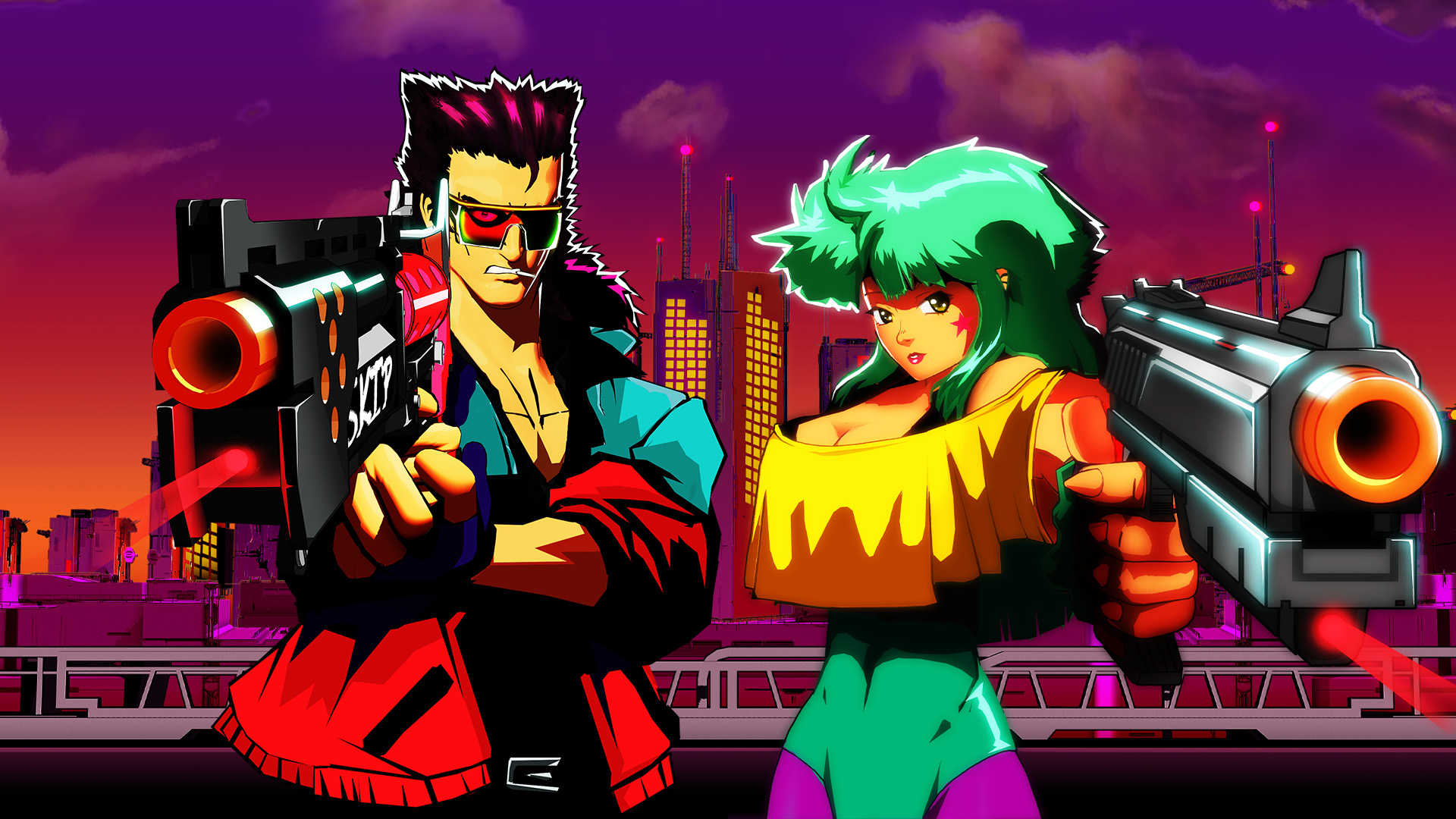
In the neon-lit cyberpunk future of Mullet Madjack, humanity is ruled by AI and only responds to short bursts of dopamine delivered via the internet, while robotic billionaires control society and claim to be gods. If you’re looking for subtlety, you’ve come to the wrong place; there are no cowards here. Things might seem bleak, but Jack, a badass hero armed with cheesy one-liners and a love for soda, is not going to take the robotic uprising lightly. Working as a Peace Corps moderator, he sets out to “ban” every robot from being alive.
Moderators like Jack are nearly invincible, but there is a catch, as his lifespan is tied to the amount of dopamine he can grant his viewers through Peace Corps’ livestreams. Failing to excite your audience for longer than 10 seconds results in your death, while violently executing your enemies extends that timer by a couple seconds. What results is an overwhelming cacophony of gunfire, screaming, and metal being thrashed as you bulldoze through each room, all in the name of that sweet, sweet dopamine.
Kicking Doors and Taking Names

The gameplay in Mullet Madjack can only be described as electrifying; there is something so viscerally satisfying about bursting into a room feet-first and decimating every enemy you see, be it by kicking them into a pool of acid or headshotting them with a railgun, never stopping in your tracks like a true retro FPS protagonist. It takes a second to get used to such a fast-paced gameplay loop and quite a bit of skill to actually pull off what the game asks of you in some of the higher difficulties, but once you reach that flow state, the game rewards you with an overwhelming feeling of invincibility.
Each main story chapter is structured as a set of ten semi-randomized floors, introducing more enemies, hazards, and getting longer as you progress. It might seem simple at first, but level length is a key part of Mullet Madjack and directly ties into its gameplay and difficulty. Moving through bigger levels means having to refresh your ten seconds of life over longer periods of time, which can get tricky as hazards and dangerous enemies start to pile up. The game’s endless mode even starts deducting seconds out of your maximum life as you progress through the floors, which creates an even bigger challenge. It’s very rare that a game moves so fast that it messes with your time perception, as I swear that sometimes the ten-second timer can actually feel like three when you are locked in to the action.
What Mullets my Madjack

Mullet Madjack’s story mode is reasonably short, but it manages to keep things exciting by featuring varied boss fights and interludes after each chapter. Some involve your basic retro FPS gameplay of strafing and jumping, while others can turn into sniper duels. Sadly, the game’s bosses end up feeling more like a formality, as they aren’t that tough to take down for the most part. Mullet Madjack’s true challenge comes from its focus on speedrunning, giving you the purpose to beat your own times rather than the actual enemies, which might not be for everyone.
The game’s soundtrack is also worth noting, featuring music that ranges from chiptune to synthwave and even a power ballad in the form of Hard Reset, all very fitting with the game’s aesthetic and timeframe, but not necessarily its gameplay. Drawing a comparison between Mullet Madjack and Hotline Miami is quite easy, as they both feature a neon-lit aesthetic and brutal, fast-paced combat, but while Hotline Miami’s soundtrack sucks you into the carnage, Madjack’s feels closer to a beat ‘em up’s score, not necessarily playing an active role and even feeling unmemorable at times due to its poor track distribution.
Final Verdict

Mullet Madjack shows an expert understanding of old-school anime and doesn’t compromise on its message at any point. It’s quite clear that the developer harbors a deep love for the media that the game pays homage to, and its art style goes beyond just being a superficial aesthetic choice, firmly rooting itself into the game’s tone and everything that surrounds it.
Even though its roguelite elements didn’t necessarily wow me, the game still stands as a captivating bite-sized experience that delivers on fast-paced action, violence, and immaculate anime vibes. Jack is a very likeable protagonist, and his quips are a fun mixture of cheesy one-liners and references to modern internet culture, expertly voice-acted in both the Brazilian Portuguese and English dubs. All in all, Mullet Madjack is the perfect example of what indie games are about: talented people with unique visions creating labors of love.
Mullet Madjack was reviewed on PC with a code provided by Epopeia Games. It is also available on Nintendo Switch and Xbox Series X.
More From Us:
Diablo IV: Lord of Hatred Review (Xbox): Warlocking In
The Review
PROS
- Fantastic fast-paced gameplay
- Impeccable sense of humor and style
- Engaging story mode with a good bit of novelty between chapters
CONS
- Superficial roguelite elements
- Not much of its soundtrack stands out
- Bosses are a stepping stone rather than a challenge


